
Councilor of the South
Rana Said, MD, FAAN
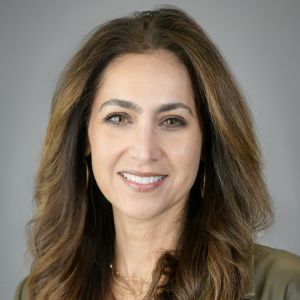
Rana R. Said, MD, FAAN, is Professor of Pediatrics and Neurology at the University of Texas Southwestern Medical Center and Associate Clinical Chief of the Division of Pediatric Neurology. She has dedicated her career to educating and mentoring the next generation of child neurologists, building one of the nation’s leading child neurology training programs at UT Southwestern. Over more than two decades, she has trained more than 70 child neurologists, expanded the residency from one to seven residents per year, and developed seven pediatric neurology subspecialty fellowship programs. She directs the Ketogenic Diet Program and the Angelman Syndrome/Dup15 Clinics at Children’s Health Dallas, where her clinical and academic interests include medical education, intractable epilepsy, epilepsy surgery, status epilepticus and NORSE, ketogenic diet therapies, and rare neurogenetic disorders.
Nationally, Dr. Said has served in leadership roles within the American Academy of Neurology (AAN) and the American Epilepsy Society (AES). She currently serves as Vice Chair of the AAN Brain Health Committee and Chair of the AES Diversity, Equity, and Inclusion Committee. She recently completed her tenure as Chair of the AAN Pipeline Subcommittee and served on AAN Education and Graduate Education committees for more than 15 years. She received the 2023 Child Neurology Society and Professors and Educators of Child Neurology Training Program Director of the Year Award and the 2025 A.B. Baker Award for Lifetime Achievement in Neurology Education.
Throughout her career, Dr. Said has believed that the most meaningful legacy of a physician is equally the patients and families they care for, and the people they inspire, mentor, and empower to care for generations to come.
What have been your most important or rewarding experiences in your years with CNS or other professional organizations, and how have these experiences shaped your vision of the direction CNS might take under your leadership?
When I reflect on my career, the thread running through my most rewarding experiences with the Child Neurology Society and other professional organizations is people. Building programs has been rewarding, but the greatest privilege of my career has been investing in people. Through mentorship, collaboration, and community, I have encouraged others to discover their strengths while learning from extraordinary colleagues. I still remember my first CNS meeting as a “baby neuron,” a first-year resident in Boston. I was overwhelmed by how much there was to learn, but I also felt immediately welcomed into a community where people genuinely wanted one another to succeed. Before I left, my mentor, Dr. N. Paul Rosman, sat with me, the thick program open, circling sessions with his familiar red pencil. At the time, I thought he was helping me navigate a conference. Looking back, I realize he was showing me what it meant to belong to a profession that believes in its trainees and invests in its future. That lesson has stayed with me. More than two decades later, it still shapes how I think about the CNS. Child neurology occupies a unique space at the intersection of pediatrics, neuroscience, and some of the most life-changing diagnoses a family will ever face.
CNS has always been the place where the distinct identity of our field is celebrated, protected, and advanced. Receiving the 2023 CNS/PECN Training Program Director of the Year Award was meaningful not only as an honor, but for what it reflected: the collective success of the residents, faculty, and mentors I have worked with over more than two decades. Every learner has challenged my assumptions and reminded me that education is never one-directional. That recognition affirmed my belief that CNS sees education not as an administrative duty, but as one of the most important ways our specialty sustains itself. My work with the AAN and the AES expanded that lesson nationally. As a child neurologist at tables that often skewed toward adult neurology, I felt a responsibility to represent our field’s particular needs. When child neurologists are not in those rooms, decisions get made without us. Chairing the AES Diversity, Equity, and Inclusion Committee, along with my experience as a physician who came to this country from Jordan, reinforced that building a more inclusive specialty is not a project with a finish line.
Through the Epilepsy Foundation of Texas and Kamp Kaleidoscope, I have seen how much it means to underserved families to feel seen by the medical system. That philosophy shapes my vision for CNS. Our greatest strength has always been our culture of generosity, mentorship, and collaboration. As our field evolves through advances in genetics, precision therapeutics, neurotechnology, and artificial intelligence, CNS can remain the professional home that connects us while preparing us for the future. If given the opportunity to lead, I would bring a style grounded in listening, curiosity, and consensus building, helping people become the leaders and advocates they may not yet realize they can be.
What are the most challenging issues facing child neurologists today, and how would the CNS, under your leadership, help its members meet those challenges?
Child neurology has never been more exciting or more challenging. Scientific discoveries are transforming what we can offer children and families, yet those advances come at a time when our workforce is stretched, our practices are increasingly complex, and many colleagues are struggling to sustain the joy that first drew them to this profession. For most of my career, I have viewed our workforce challenge through the lens of education. Every resident we inspire, every trainee we mentor, and every early career physician we support represents not simply one future colleague, but thousands of children and families whose lives will be touched throughout that physician’s career.
The impact of educating one physician extends far beyond a single career; it creates a ripple effect that benefits generations of patients, families, learners, and colleagues. Investing in people is the most enduring way we can strengthen child neurology. That investment means continuing to attract exceptional students into our field while preparing them for a rapidly changing future. We should embrace competency-based education, thoughtfully explore innovative training pathways, thoughtfully integrate artificial intelligence and emerging educational technologies, and strengthen mentorship throughout the educational continuum.
At the same time, we must support practicing child neurologists by addressing burnout, reducing unnecessary administrative burden, and creating opportunities for continued growth, connection, and professional fulfillment. I believe the CNS is uniquely positioned to lead this work. The Society can advocate for expanded training opportunities, provide practical educational resources, foster leadership development, strengthen mentorship, and help members navigate extraordinary scientific advances while maintaining the sense of community that has always distinguished child neurologists. Throughout my career, I have believed that the greatest legacy any of us leaves is not a publication, a title, or an award, but the people in whom we invest. There are few investments with a greater ripple effect. My hope is to help ensure that CNS continues to be the place where those future leaders find inspiration, opportunity, and a professional home. It would be a privilege to help build that future together.